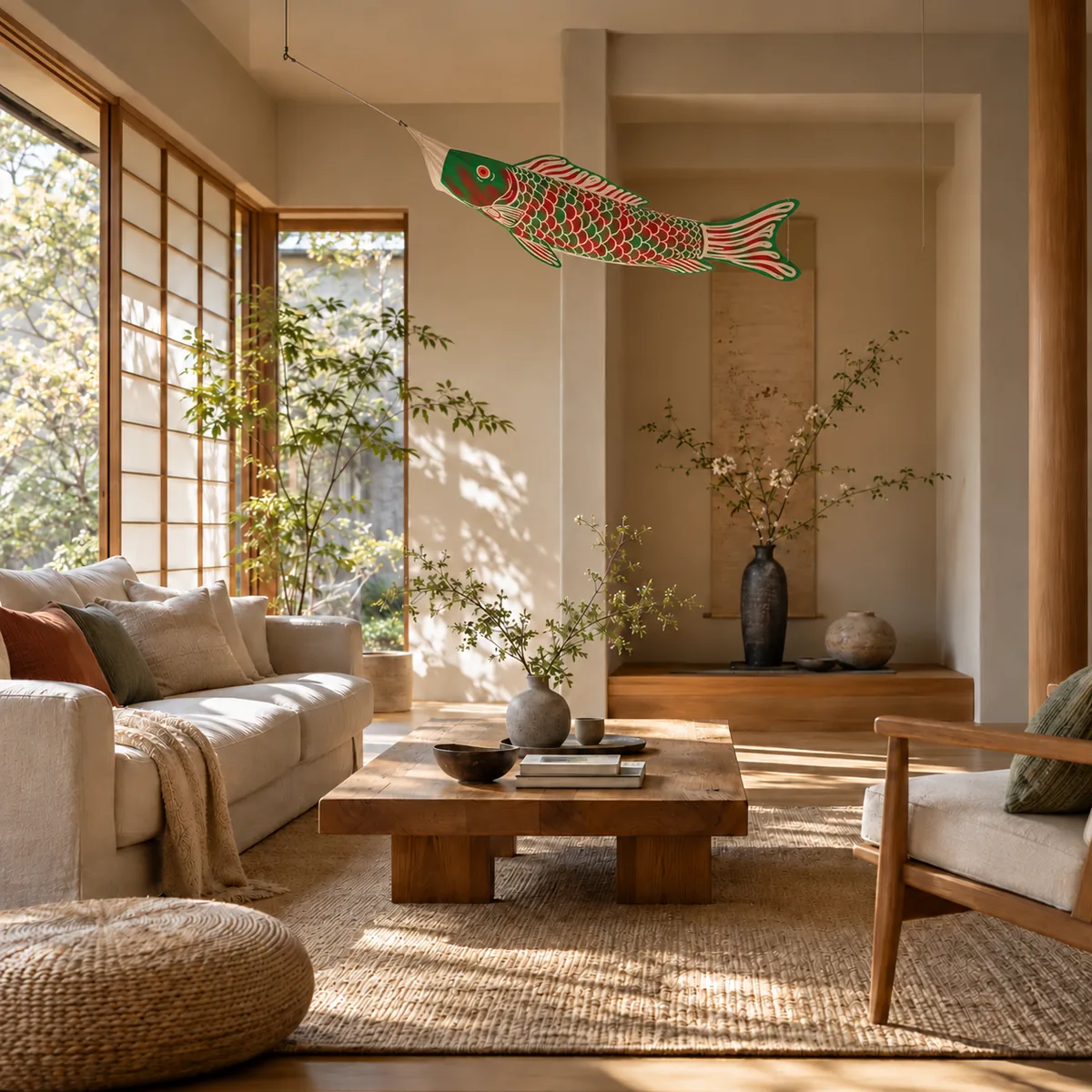
 Simulated setting
In Japan, carp swim in the sky too. All it takes is for the wind to rise.
For generations, koinobori have been part of the spring festivals. Today they find a place in our gardens, on our balconies, inside our homes and even at family celebrations.
In these pages, we tell their story, explore their ties with Japanese art and share ideas for hanging or giving them.
From the symbol of the carp to Hokusai’s wave, there is plenty to discover.
The first articles are on their way.
 Simulated setting
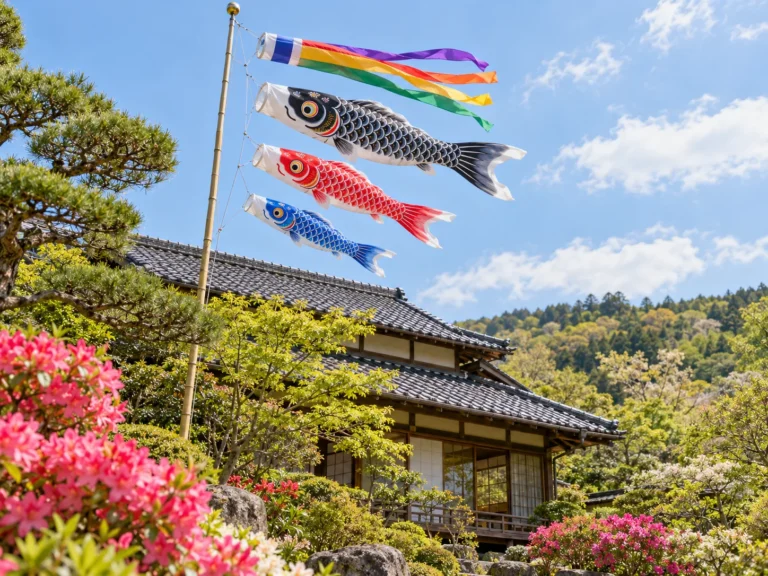
What Does a Koinobori Symbolise in Japan?
In Japan, a koinobori is a carp-shaped windsock traditionally flown in the weeks around 5 May, Children's Day, or Kodomo no Hi. The carp stands for courage, strength and perseverance. Families raise these streamers as an expression of hope: may…
 Simulated setting
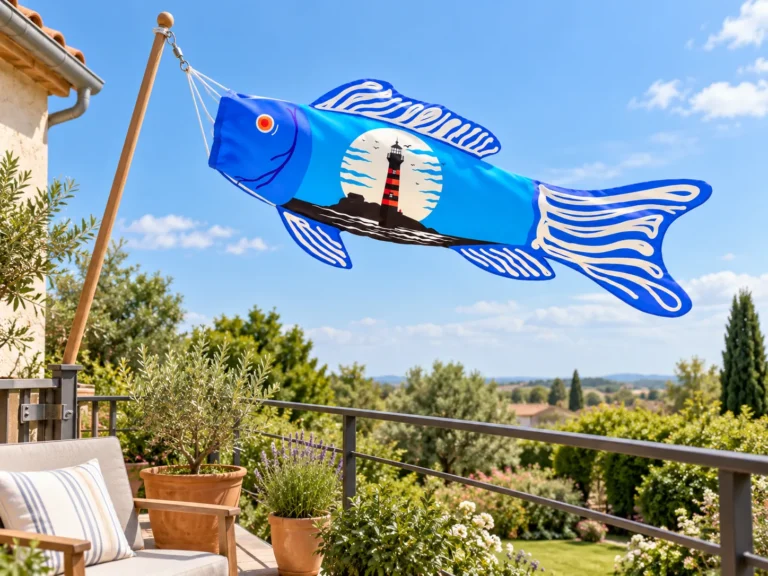
How Do You Hang a Koinobori at Home?
To hang a koinobori, use a securely fixed support and leave enough room for the carp to extend and turn with the wind. A suitable pole often works well in a garden; on a balcony, a safe fixing point and…
 Simulated setting
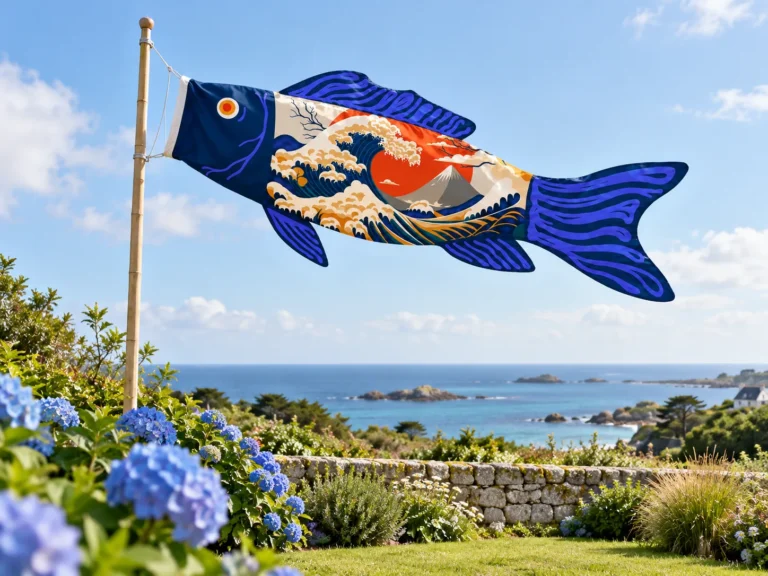
How Can Koinobori Decorate Your Garden?
To decorate a garden with a koinobori, choose a drawing whose colours work with the landscape, then hang the carp where it can extend without obstruction. One may be quite enough. The wind contributes something fixed ornaments cannot offer: movement…
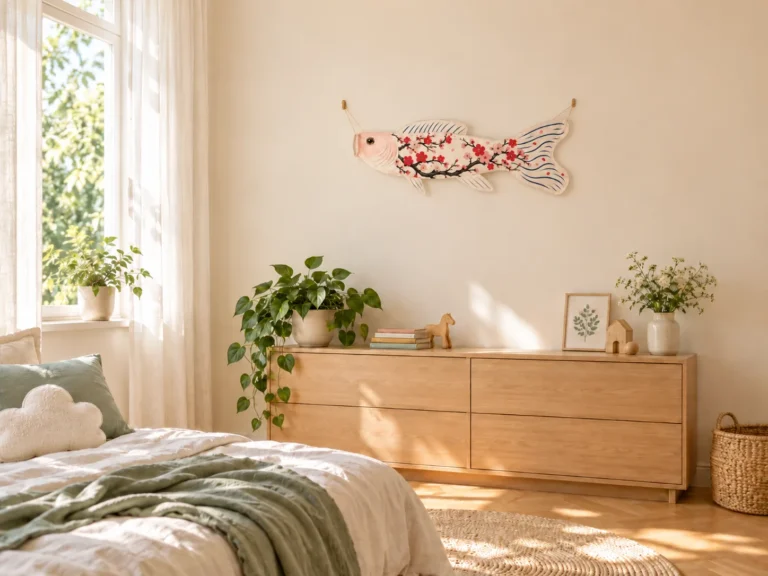 Simulated setting
Can You Hang a Koinobori in a Bedroom?
Yes. A koinobori can decorate a bedroom, living room or study even without wind. Indoors, the fabric carp is displayed for its drawing and shape rather than for flight. In a child's bedroom, particular care is needed with fixings, cords…
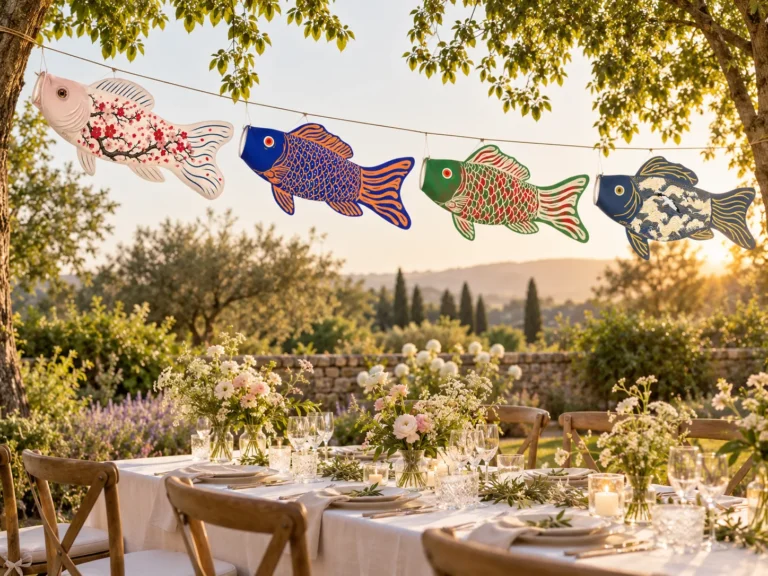 Simulated setting
Can Koinobori Decorate a Wedding or Celebration?
Yes. Koinobori can be used for weddings, birthdays, new-baby celebrations, family gatherings and ceremonies, indoors or outside as the setting allows. You may choose existing designs or ask BCDG to consider a custom drawing. For private customers, bespoke projects start…
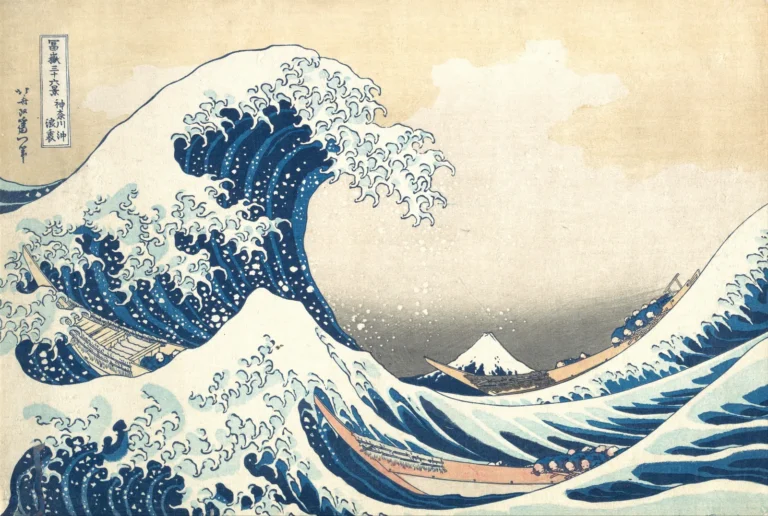
Why Is Hokusai’s Great Wave So Famous?
The Great Wave off Kanagawa is a woodblock print by Katsushika Hokusai, published around 1831 as part of his series Thirty-six Views of Mount Fuji. Its power lies partly in the composition: an enormous wave towers above small boats while…